Tummy Tuck
ABDOMINOPLASTY FOR A FLATTER, FIRMER ABDOMEN
A tummy tuck—also called an abdominoplasty—can remove excess abdominal skin, tighten weakened abdominal muscles, and create a flatter, more defined midsection. At Cross Medical Group, tummy tuck surgery is customized to each patient's anatomy, goals, and areas of concern.
For patients considering a tummy tuck in Philadelphia or Villanova, the procedure can address changes that diet and exercise alone cannot correct. Pregnancy, childbirth, and significant weight fluctuations can leave behind loose skin, stretched abdominal tissues, and muscle separation that may persist even after reaching a stable weight.
Some patients also notice persistent fullness in the abdomen that does not improve with sit-ups or core strengthening. A ridge or gap along the center of the abdomen may indicate diastasis recti (rectus diastasis), a separation of the abdominal muscles. When appropriate, a customized abdominoplasty can address excess skin and abdominal muscle laxity together, helping patients achieve a smoother, firmer abdominal contour.
As techniques and patient expectations continue to evolve, today's tummy tuck is increasingly focused on individualized results rather than a one-size-fits-all approach. For patients planning surgery in 2026 or looking ahead to 2027, a consultation with an experienced plastic surgeon can help determine which approach best addresses their anatomy and long-term goals.
Tummy Tuck Procedure Overview
Successful results require a few key steps both before and after the tummy tuck:
Step One: Create a Customized Tummy Tuck Plan
Dr. Kevin Cross and Dr. Jackie Lyons begin by understanding each patient's goals and evaluating their abdominal anatomy. Because tummy tuck surgery can be performed using several techniques, the approach is tailored to the patient's starting point, anatomy, and desired outcome.
Tummy tuck options may include a mini-tummy tuck, short-scar tummy tuck, or traditional tummy tuck. Depending on the patient's needs, the procedure may also incorporate liposuction to contour excess fat. Muscle tightening may also be performed when abdominal muscle separation or laxity contributes to abdominal fullness.
Step Two: Position the Tummy Tuck Scar
A well-placed incision is an important part of achieving a natural-looking tummy tuck result. Whether a short-scar or traditional incision is used, we aim to position the scar low enough to remain concealed beneath underwear, swimwear, or low-rise clothing.
Patients can bring their preferred underwear or bikini bottom on the day of surgery. This allows the surgeon to use the garment as a guide when determining the incision's placement.

*Results May Vary
Before & After Photo Gallery
See for yourself the patient transformations that can be achieved by Dr. Cross, Dr. Lyons, and their team.
Step Three: Create a Natural-Looking Belly Button
The belly button is an important detail of tummy tuck surgery and can have a significant effect on the overall appearance of the abdomen. When excess skin around the existing belly button is removed, a new opening may need to be created.
Dr. Cross and Dr. Lyons use techniques designed to create a natural-looking belly button without obvious scarring or an overly round appearance. Subtle shadows, contours, and depth help the belly button blend naturally with the surrounding abdomen.
Step Four: Support a Manageable Recovery
Tummy tuck recovery is an important part of the overall treatment experience. Dr. Cross and Dr. Lyons use surgical techniques designed to support a comfortable, manageable recovery while helping patients return to their normal activities as efficiently as possible.

SCHEDULE A CONSULTATION
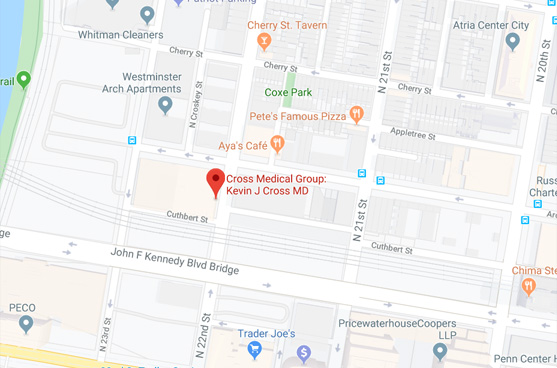
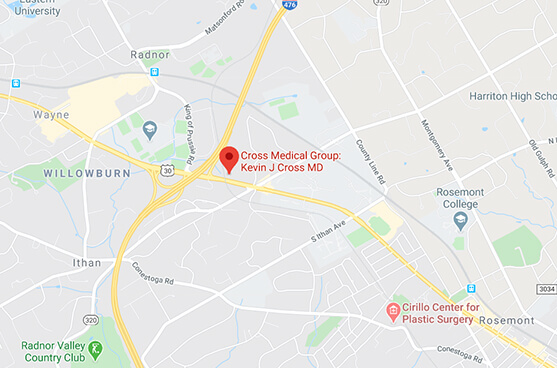
Schedule a consultation for tummy tuck surgery in Philadelphia or Villanova with Dr. Kevin Cross or Dr. Jackie Lyons at Cross Medical Group. Call (215) 561-9100 for the Philadelphia office or (610) 688-9100 for the Villanova location, or book an appointment to learn more about your options.
Tummy Tuck at a Glance
A tummy tuck (abdominoplasty) removes excess abdominal skin and can tighten stretched abdominal tissues to create a flatter, firmer abdominal contour. At Cross Medical Group, Dr. Kevin Cross and Dr. Jackie Lyons customize the procedure based on each patient's anatomy and goals.
- Also known as: Abdominoplasty
- Addresses: Excess abdominal skin, loose abdominal tissues, diastasis recti, and localized fat when appropriate
- Tummy tuck options: Mini tummy tuck, short-scar tummy tuck, and traditional tummy tuck
- May include: Muscle tightening, liposuction, or hernia repair when appropriate
- Common reasons: Pregnancy, childbirth, significant weight loss, and major weight fluctuations
- Results: A flatter, firmer, and more defined abdominal contour
- Surgeons: Dr. Kevin Cross and Dr. Jackie Lyons
- Locations: Philadelphia and Villanova, on the Main Line
Causes of Conditions Addressed by a Tummy Tuck
Several changes can contribute to excess abdominal skin, muscle separation, and stubborn pockets of fat after pregnancy, childbirth, or significant weight fluctuations. A tummy tuck can address some or all of these concerns by removing excess skin, tightening weakened abdominal tissues, and, when appropriate, incorporating liposuction or hernia repair.
Skin Changes
Collagen and elastin are two key components that support the skin's thickness, strength, and ability to contract. Pregnancy and significant weight gain stretch the skin and can damage these supportive fibers. When the skin stretches beyond its ability to recover, it may develop loose, thin areas and stretch marks.
Some of these changes can persist after pregnancy or weight loss. Excess skin may remain even after the body returns to a stable weight, particularly when the skin has lost some of its elasticity.
A tummy tuck can remove loose, excess abdominal skin and may also remove stretch marks located on the skin that is excised. Stretch marks above the belly button generally cannot be removed entirely, although removing and repositioning excess skin may change their location and make some less noticeable.
Abdominal Muscle Changes
Pregnancy and significant weight gain can also stretch the fascia, the connective tissue that supports the abdominal muscles. When the fascia between the rectus muscles stretches and widens, the muscles can separate along the center of the abdomen. This condition is known as diastasis recti.
Diastasis recti can contribute to a persistent abdominal ridge or fullness even when the underlying abdominal muscles are strong. Diet and exercise may strengthen the muscles but cannot necessarily correct the stretched fascia or bring separated muscles back together.
During a tummy tuck, abdominal muscle tightening can be performed when appropriate to improve the position and support of the abdominal wall.
Pregnancy and abdominal tissue changes can also contribute to hernias, including umbilical hernias near the belly button. Some patients may notice fullness around the navel or a belly button that protrudes outward. When a hernia is present, repair may sometimes be performed in conjunction with a tummy tuck.
Abdominal Fat Changes
Weight gain and loss cause fat cells to expand and shrink rather than significantly changing the overall number of fat cells in a particular area. After pregnancy or weight fluctuations, some patients develop localized pockets of abdominal fat that can be resistant to diet and exercise.
Liposuction may be incorporated into a tummy tuck when excess localized fat contributes to the abdominal contour. This allows the surgeon to address both excess skin and unwanted fat as part of a customized body contouring plan.
A tummy tuck can address several factors that contribute to abdominal fullness, including excess skin and, when appropriate, stretched abdominal tissues, localized fat, and certain hernias. The specific combination of techniques depends on the patient's anatomy, concerns, and goals.
Tummy Tuck Procedure Steps
The Skin-Only Tummy Tuck
Excess skin is addressed by removal. For many patients, this is all that is necessary to achieve a slimmer look. The technique is known as a "skin only" or a "modified" tummy tuck and can be used to tighten loose skin and remove stretch marks located below the belly button, as well as all poor-quality skin above and below the belly button.
For this tummy tuck procedure, Dr. Cross or Dr. Lyons lifts the skin and pulls it tight. Excess skin is tucked and removed through an incision that runs horizontally and below the underpants or bikini line. The advantages of a "skin only" tummy tuck include less discomfort during the recovery period because no muscle tightening is involved. For most patients, the muscle tightening is what causes most of their discomfort after the procedure. Also, liposuction can be used to do more contour correcting, when necessary, because not as much work is being done under the skin.
With this tummy tuck technique, patients are able to get back to exercise more quickly (generally in two to three weeks) and do not have any limitations on core work (such as planks or sit-ups).
The Short-Scar or Mini Tummy Tuck
The term "short-scar" or "mini" tummy tuck is generally used to describe procedures that make use of incisions that are hidden in the lower pubic region and that do not extend out to the hips. This procedure is a great option for patients who have poorly healed C-section scars, a shelf or roll of skin in the lower pubic area, and loose skin below and around the belly button. It is not as effective for patients with loose skin above the belly button.
Dr. Cross and Dr. Lyons can offer short-scar tummy tucks for patients who require muscle tightening, and they can effectively use liposuction in short-scar or mini tummy tuck procedures. They emphasize that the key to an effective short-scar or mini tummy tuck technique is in selecting the correct patient for the procedure.
Muscle Tightening and Fat Contouring
When muscle separation, muscle looseness, or diastasis recti is present, Dr. Cross and Dr. Lyons address the problem by repositioning the muscles.
During this procedure, the muscles are not cut. Instead, muscle repositioning is performed by tightening the fascia that surrounds the muscles. At this time, hernias are repaired, and bulges are reduced. When fatty pockets are present, they are sculpted with liposuction—which can be combined with a skin-only tummy tuck or with skin removal and muscle tightening.
How a Tummy Tuck Compares with Other Procedures
| Comparison | Tummy Tuck | How It Differs |
|---|---|---|
| Tummy Tuck vs. Liposuction | Removes excess skin and can tighten abdominal tissues | Liposuction primarily removes localized fat and does not remove significant excess skin or tighten separated abdominal muscles |
| Mini Tummy Tuck vs. Traditional Tummy Tuck | Traditional tummy tuck addresses a larger area of the abdomen | A mini tummy tuck typically focuses on excess skin and laxity below the belly button, while a traditional tummy tuck can address more extensive skin and muscle laxity |
| Tummy Tuck vs. Mommy Makeover | Focuses specifically on the abdomen | A mommy makeover combines a tummy tuck with other procedures, such as breast surgery or liposuction, to address multiple areas affected by pregnancy and childbirth |
Recovery After Tummy Tuck Surgery
The appearance of a tummy tuck scar depends in part on minimizing tension where the incision is closed. Dr. Kevin Cross developed his own version of an eversion closure technique, also used by Dr. Jackie Lyons, designed to reduce tension at the skin edges and help minimize scar widening and thickening.
Tummy tuck recovery varies depending on the surgical technique. With a skin-only tummy tuck, recovery is primarily influenced by the tightness patients feel as the abdominal skin adjusts. Dr. Cross and Dr. Lyons use a technique that allows many patients to walk nearly upright immediately after surgery. Patients typically wear a supportive compression garment for the first two days, after which they can shower and wash normally. Dissolvable sutures and watertight surgical glue are used to close and protect the incisions.
Most patients experience moderate discomfort along the incision for about a week, although many require little pain medication. Most can return to normal activities, including driving, within several days.
When muscle tightening is performed, patients may experience more abdominal discomfort and need a few additional days to recover. Dr. Cross and Dr. Lyons often use a long-acting numbing medication that lasts approximately three days and, according to the practice, has reduced patient discomfort by more than 50%.
Typical exercise milestones include:
- Around 2 weeks: Exercise after a skin-only tummy tuck
- Around 3 weeks: Light exercise after muscle tightening
- Around 4 weeks: Full exercise, excluding core exercises, after muscle tightening
- Around 6 weeks: Core exercises after muscle tightening
Recovery timelines vary by patient and procedure. Patients should follow their surgeon's specific instructions for returning to exercise and other activities.
Tummy Tuck FAQs
A tummy tuck, or abdominoplasty, removes excess abdominal skin and can tighten stretched abdominal muscles and supporting tissues. Liposuction may also be incorporated to improve abdominal contour when appropriate.
Tummy tuck surgery may be appropriate for adults with excess abdominal skin, weakened or separated abdominal muscles, or changes in abdominal contour after pregnancy or significant weight loss. Candidates should generally be in good overall health and at a stable weight.
A tummy tuck can remove some stretch marks when they are located on the excess skin being removed, particularly those below the belly button. Stretch marks on skin that remains cannot be removed through the procedure.
Yes. When diastasis recti contributes to abdominal separation or fullness, a tummy tuck can include tightening of the abdominal fascia to bring the rectus muscles closer together and improve abdominal contour.
Liposuction can be combined with a tummy tuck when localized pockets of fat contribute to the abdominal contour. The combination allows the surgeon to address excess skin and fat as part of a customized treatment plan.
Recovery varies based on the extent of surgery and whether muscle tightening or other procedures are performed. Many patients can resume light daily activities within several days, while exercise and more strenuous activities typically require a longer recovery period.
Tummy tuck results are designed to be long-lasting. Maintaining a stable weight and healthy lifestyle can help preserve the improved abdominal contour. Pregnancy and significant future weight fluctuations can change the results.
Yes. A tummy tuck requires an abdominal incision, but the incision can typically be positioned low on the abdomen so it is concealed beneath underwear or swimwear. Scar appearance continues to change and mature during the healing process.
A mini tummy tuck generally addresses excess skin and laxity limited primarily to the lower abdomen, while a traditional tummy tuck can address a larger area of abdominal skin and may include muscle tightening. The appropriate technique depends on each patient's anatomy and goals.
The timeline for returning to exercise depends on the surgical technique and individual healing. Patients typically resume exercise gradually, with more strenuous and core-focused activities requiring additional recovery time and clearance from their surgeon.
Body Contouring Options Beyond a Tummy Tuck
Loose skin can affect many areas of the body, not just the abdomen. It is especially common after significant or rapid weight loss, when the skin does not fully contract to fit the body’s new contours. Body contouring procedures can remove excess skin and reshape specific areas. For example, patients might consider an arm lift for the upper arms or a thigh lift, buttock lift, or lower body lift for the lower body. A facelift or neck lift can address excess skin and laxity in the face and neck.
SCHEDULE A CONSULTATION
If you’d like to find out if a tummy tuck in Philadelphia or Villanova is right for you, call Cross Medical Group to schedule a consultation in Philadelphia at (215) 561-9100 or in Villanova on the Main Line at (610) 688-9100. You can also book online to connect with Dr. Kevin Cross or Dr. Jackie Lyons, discuss your goals, and learn more about customized tummy tuck options.